
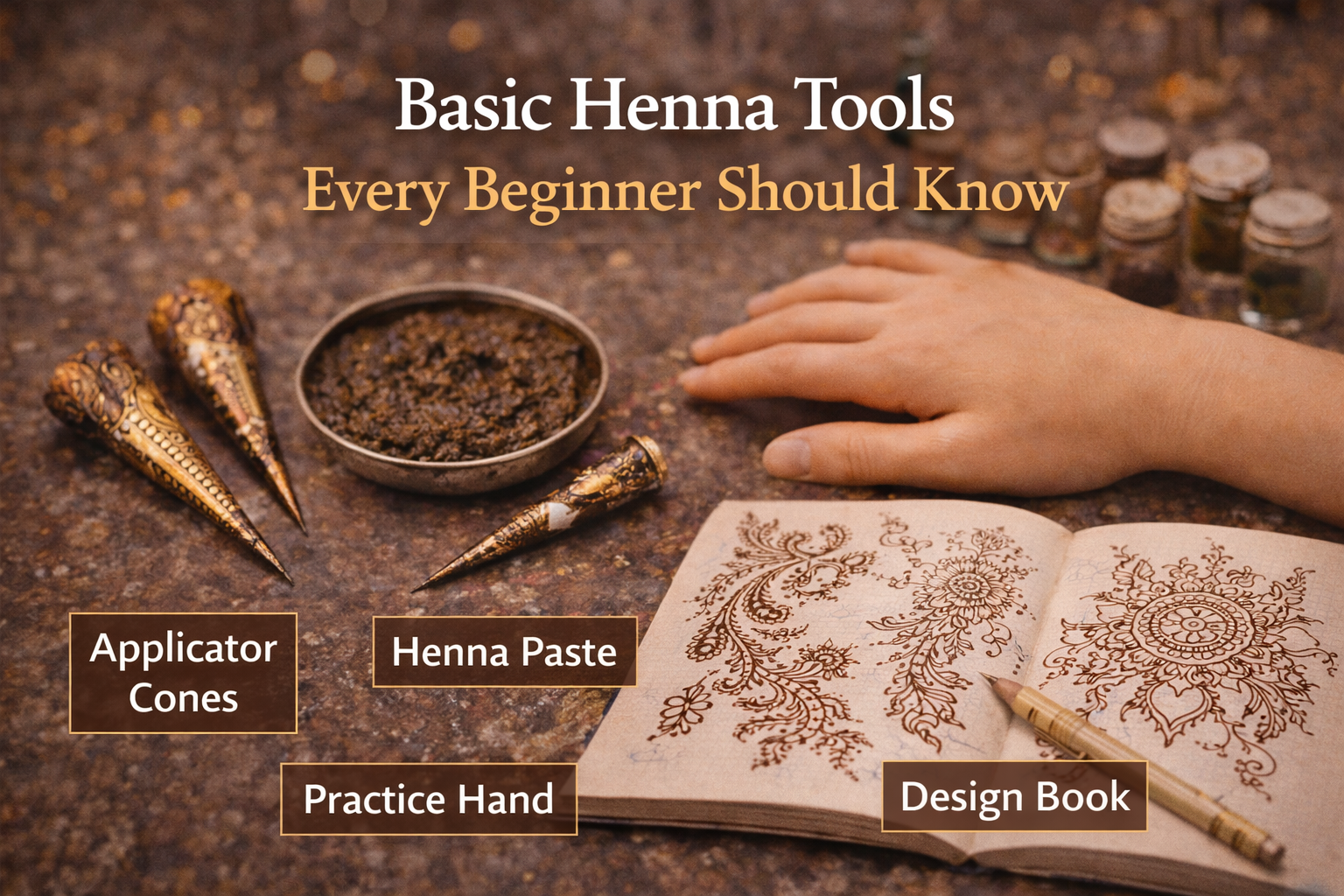
Starting your Henna learning journey becomes much easier when you understand the basic tools involved. Beginners often focus only on designs, but having the right tools and knowing how to use them plays a big role in improving technique and confidence.
This guide covers the essential Henna tools every beginner should be familiar with.
Henna Cone
The Henna cone is the most important tool. It is used to apply Henna on the skin and directly affects line quality and control.
Beginners should focus on:
- Holding the cone comfortably
- Applying even pressure
- Practicing steady hand movement
Using a well-prepared cone helps beginners practice clean lines without unnecessary strain.
Quality Henna Paste
The quality of Henna paste matters, especially for beginners. Poor-quality Henna can make application difficult and lead to uneven lines.
For beginners:
- Smooth paste consistency is important
- Henna should flow easily from the cone
- Freshness plays a key role in ease of use
Working with good-quality Henna allows beginners to focus on technique rather than struggling with application.
Tissue Paper or Cloth
Having tissue paper or a clean cloth nearby is essential during practice sessions. It helps in:
- Wiping excess Henna from the cone tip
- Cleaning minor mistakes
- Keeping hands clean while practicing
This small habit improves neatness and control.
Practice Sheets or Paper
Before applying Henna on skin, beginners should practice on paper or practice sheets. This helps in understanding:
- Line thickness
- Curve control
- Design spacing
Practicing on paper builds confidence and reduces hesitation during actual application.
Simple Reference Designs
Reference designs help beginners understand structure and flow. These do not need to be complex patterns.
Beginners should look for:
- Basic floral elements
- Simple borders
- Repetitive patterns
Starting with easy references helps build a strong foundation before moving to detailed designs.
Comfortable Seating and Lighting
A comfortable seating position and good lighting are often overlooked but very important. Proper posture helps beginners practice longer without discomfort, while good lighting improves visibility and accuracy.
Creating a comfortable practice setup makes learning more enjoyable and effective.
Final Thoughts
Learning Henna becomes easier when beginners understand the basic tools and how to use them correctly. Starting with the right essentials, practicing regularly, and focusing on technique helps build confidence step by step.
With patience and consistent practice, beginners can gradually improve their skills and explore more detailed designs over time.
Related Posts
 What to Expect from Home Henna Services in Dubai
 How to Choose the Right Henna Design for Your Wedding
 Different Types of Henna Designs Explained
