
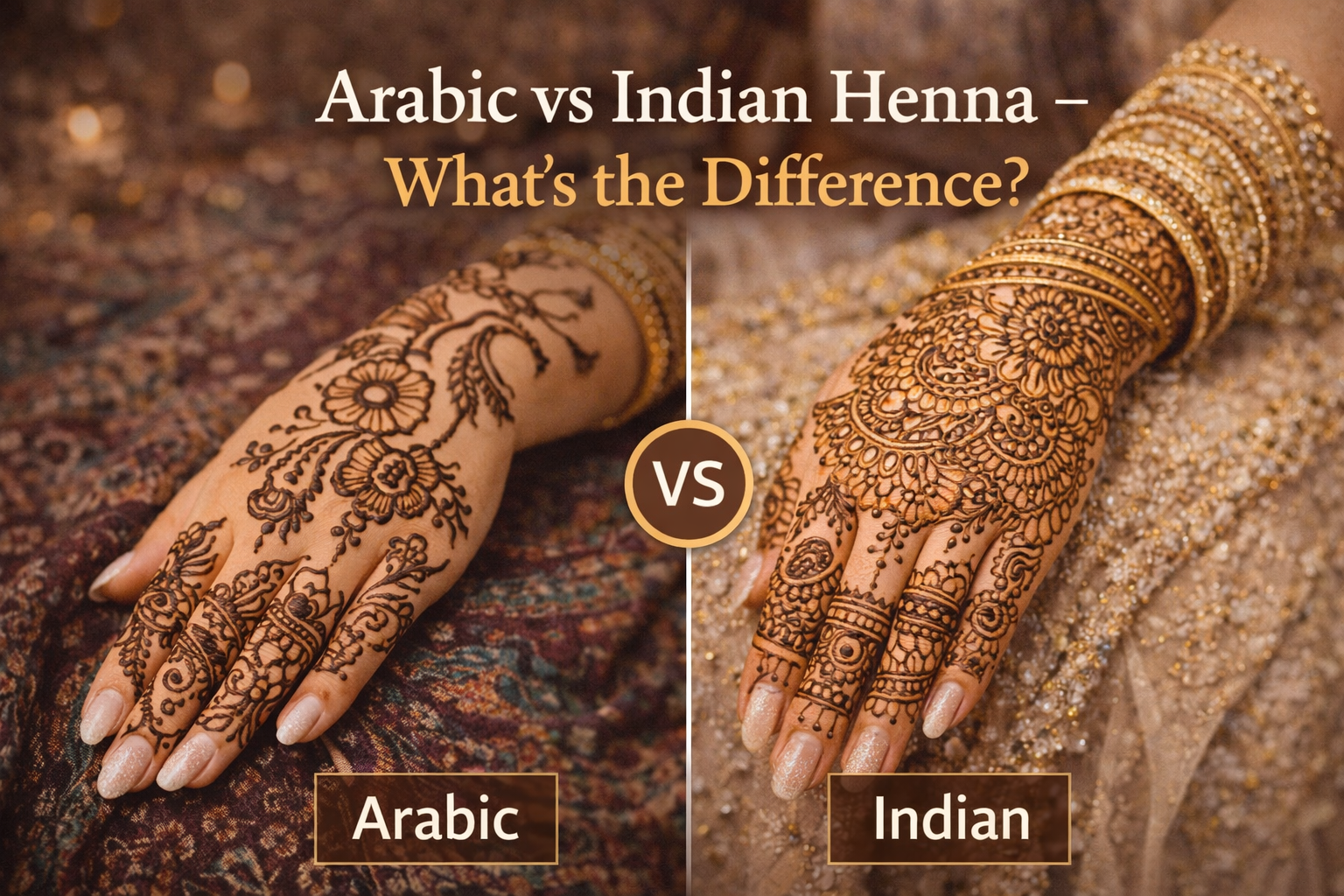
Arabic and Indian Henna are two of the most popular styles chosen for weddings, festivals, and celebrations. While both are beautiful, they differ in design structure, detailing, and overall appearance.
If you’re unsure which style suits your occasion better, understanding the key differences can make the decision much easier.
Design Style and Pattern Structure
Indian Henna designs are known for their intricate and detailed patterns. They usually cover the entire hand, often extending to the arms. These designs include fine lines, traditional motifs, and symmetrical elements.
Arabic Henna designs, on the other hand, are more open and flowy. The patterns are bold, with clear spacing between elements, giving a lighter and more modern look.
Level of Detailing
Indian Henna focuses heavily on fine detailing. The designs are dense and require more time to apply, making them ideal for bridal functions and traditional ceremonies.
Arabic Henna is less dense and focuses on bold strokes and floral patterns. This makes it quicker to apply while still looking elegant and stylish.
Coverage and Placement
Indian Henna usually covers:
- Full palms
- Back of the hands
- Sometimes arms up to the elbows
Arabic Henna often features:
- Partial hand coverage
- Diagonal or vertical flow
- Open spaces that highlight the design
The choice depends on how heavy or light you want the Henna to appear.
Suitability for Different Occasions
Indian Henna is commonly chosen for:
- Weddings and bridal functions
- Engagement ceremonies
- Traditional festivals
Arabic Henna works well for:
- Festivals and family gatherings
- Parties and celebrations
- Clients who prefer a modern look
Both styles can also be adapted based on personal preference.
Time Required for Application
Due to its detailed nature, Indian Henna takes more time to apply. Brides usually plan their Henna session well in advance to ensure enough time for proper detailing.
Arabic Henna takes comparatively less time, making it suitable for events where time is limited or when multiple people need Henna applied.
Choosing the Right Style for You
The right Henna style depends on:
- The type of event
- Your outfit and jewelry
- Personal comfort and preference
Some clients also choose a mix of both styles to create a unique look that balances tradition and modern design.
Final Thoughts
Both Arabic and Indian Henna styles have their own beauty and significance. Understanding their differences helps you choose a design that complements your occasion and personal style.
Discussing your preferences in advance ensures the final design suits your expectations and event perfectly.
Related Posts
 What to Expect from Home Henna Services in Dubai
 How to Choose the Right Henna Design for Your Wedding
 Different Types of Henna Designs Explained
